Printing in Clay on a Zcorp Powder Printer
What happens when you try to run clay through a Zcorp powder binder-jetting printer, pushing the machine somewhere it was never designed to go.
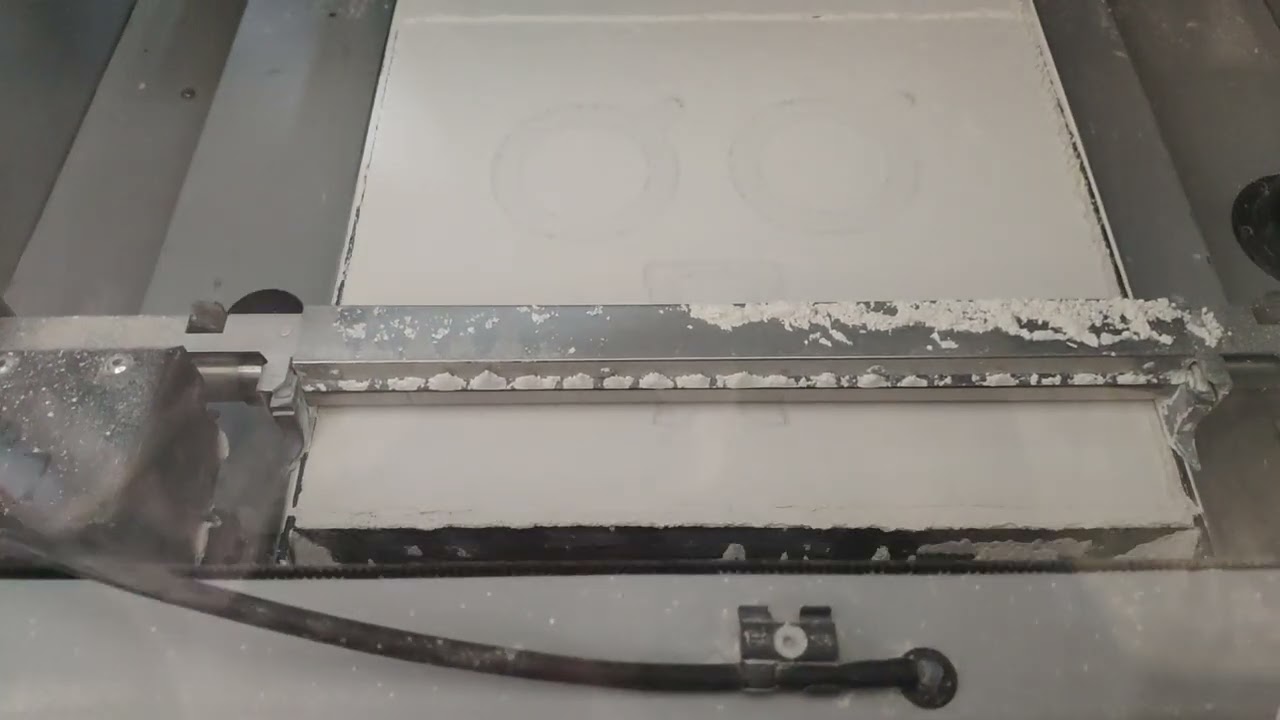
Zcorp powder printers work by depositing a liquid binder onto a bed of powder, layer by layer, to build up a solid object. The powder is usually a plaster-like material; the binder sets it. The results can be quite fine in detail, though the parts are fragile until they’ve been hardened or infiltrated with something.
The obvious question is: what happens if you swap in a different powder?
Clay as a substrate
Clay has some superficial similarities to the plaster powder Zcorp intended: it’s a fine dry material, it can absorb liquid, and it’s cheap. The differences are significant, though. The particle size and density aren’t the same, the way it responds to the binder is different, and the binding chemistry that works on plaster doesn’t necessarily translate.
What this means in practice is that you’re improvising. The machine doesn’t know it’s not running the right material; it’ll go through its motions regardless. Whether the output holds together is a different matter.
What the experiment found
The video is about 90 seconds, more of a demonstration than a deep technical dive. The results are what you’d expect from a first pass at something the machine wasn’t designed to do: imperfect, but not a total failure. The parts come out with a different character to plaster-printed objects. The surface texture is coarser, the structural integrity is uncertain until it dries, and some of the detail is lost.
Whether that’s a problem depends on what you’re trying to make. For certain applications (texture samples, rough prototypes, sculptural work where some imprecision is acceptable) there’s an argument for it.
Why bother
Partly curiosity. Partly because material constraints in manufacturing are often softer than the documentation suggests, and the only way to find out is to try. The Zcorp platform is old enough that the interesting experiments aren’t being done commercially anymore; that leaves it to whoever still has one of these machines running.
It’s not a technique I’d recommend without a lot of patience for calibration. But it works, after a fashion.